
From historical exploration reports to a clearer next question.
RadiXplore starts with historical geological evidence and makes it searchable. It then reconstructs the exploration story behind the records, connecting observations, programmes, interpretations and outcomes so geologists and authorised AI agents can investigate what the evidence collectively suggests through appropriate geological reasoning workflows.
Historical records
Exploration memory

Mining World Model
Geological reasoning

Source-backed questions
Expert judgement
Step 1 - Find and recover the evidence
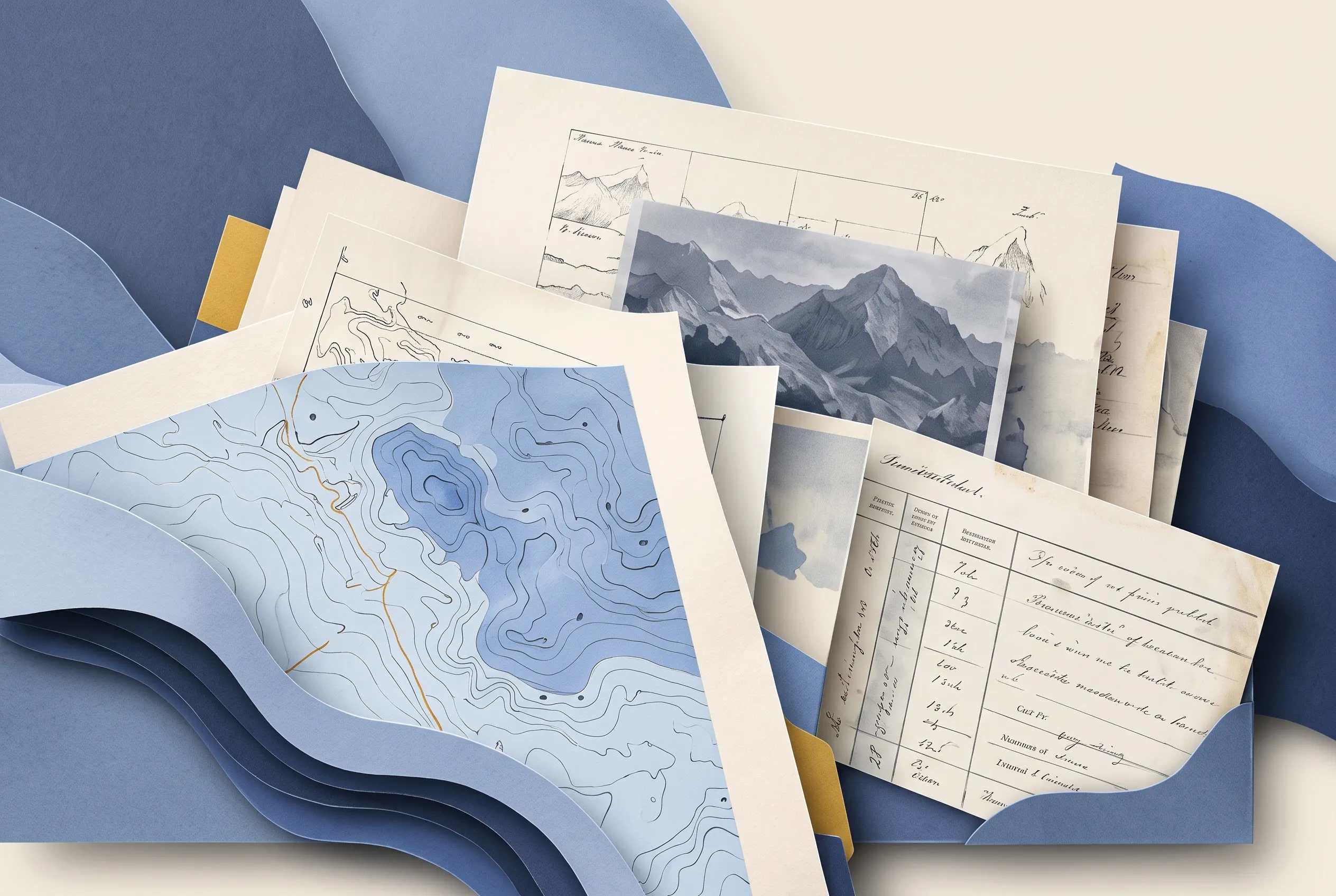
Historical exploration records exist in government archives, project files, maps, tables, drilling records, interpretations and other sources. They were collected over decades, often by different explorers working with different objectives and geological models.
RadiXplore makes supported historical evidence searchable and can recover additional information from difficult source formats where that processing is available.
What this enables
Find relevant reports and observations without manually reviewing an entire document collection from the beginning.

Step 2 - Reconstruct exploration memory
A geological report is more than a list of results. It can explain why an anomaly was pursued, what was expected, how a programme was designed, what it tested and how its outcomes were interpreted.
RadiXplore connects the information that forms exploration memory: locations, activities, observations, hypotheses, historical decisions, results and subsequent interpretations.
When intent is not explicitly documented, a reconstructed explanation remains an inference-not a historical fact.
What this enables
Understand not only what was recorded, but how exploration understanding evolved.
Step 3 - Connect the Mining World Model
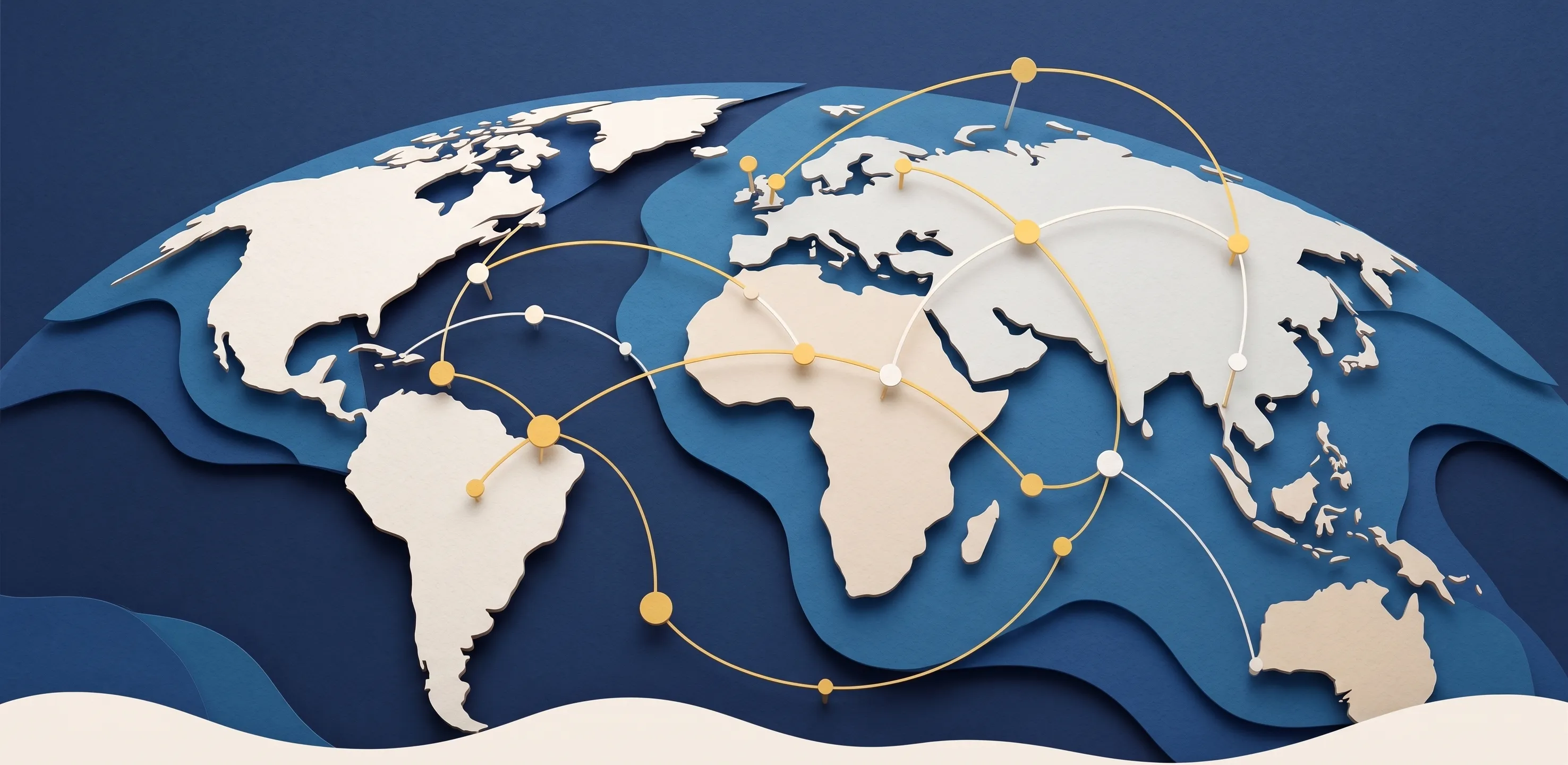
RadiXplore calls its connected representation of historical mining and exploration knowledge the Mining World Model.
It connects evidence across places, dates, reports, exploration activities, commodities, observations, projects and interpretations. This provides geological context for geologists and, where supported and authorised, AI agents investigating real geological questions.
The Mining World Model is not a prediction engine or a claim that AI automatically knows all geology. It is an evidence-connected environment for mining-specific investigation.
AI agents and analytical workflows are not the same thing. An AI agent can select and use tools across multiple investigative steps; an analytical workflow defines a sequence of retrieval, analysis or verification tasks. AI agents may use these workflows when investigating the Mining World Model.
What this enables
Move from isolated search results to a connected account of the exploration history.

Step 4 - Reason across the evidence
Using modern AI and geological reasoning frameworks, RadiXplore can help investigate what was tested, whether historical work adequately addressed the original question, where observations conflict and which questions remain unanswered.
Mineral-system concepts, geological context and evidence from different exploration programmes can be considered together rather than in isolation.
What this enables
Systematically surface evidence-backed questions and potential opportunities for experts to examine.

Step 5 - Verify and decide
An inference matters only if it can withstand scrutiny. RadiXplore's approach keeps important conclusions connected to source evidence wherever possible, so technical teams can inspect the reasoning and challenge the interpretation.
We make inferences, not predictions
RadiXplore does not guarantee the presence of mineralisation or tell a geologist where to drill. The next test, investment or exploration decision remains with the experts.
One evidence model. Two ways to investigate.
Explore connected mining evidence directly, or enable authorised AI agents to investigate within agreed workflows.
- Human-led investigation
For your team
Search historical reports, inspect maps and technical data, investigate exploration history and verify findings against original sources.
- Governed, scoped access
For authorised AI agents
Where supported, AI agents can retrieve source-linked evidence, examine relationships and investigate geological questions using approved tools.
The same connected, source-backed evidence
Both pathways depend on data quality, provenance and permissions. Geological decisions remain with people.
AI agent capabilities depend on the deployed product, agreed scope and permissions. They do not imply unrestricted API or MCP access.
What RadiXplore is not
Not just a PDF search engine
Search is where the investigation begins; the next value comes from connecting evidence and reconstructing context.
Not a generic AI chat interface
Mining-specific evidence, location, chronology and geological reasoning frameworks matter.
Not an automated geologist
AI can expand the evidence a team investigates. Geological expertise determines what the evidence means.
Not a deposit prediction tool
We identify questions and evidence-backed opportunities worth investigating, not guaranteed discoveries.

See what historical evidence can reveal.
Start with the searchable data in your jurisdiction, then explore how a deeper investigation can help your team understand the exploration story.